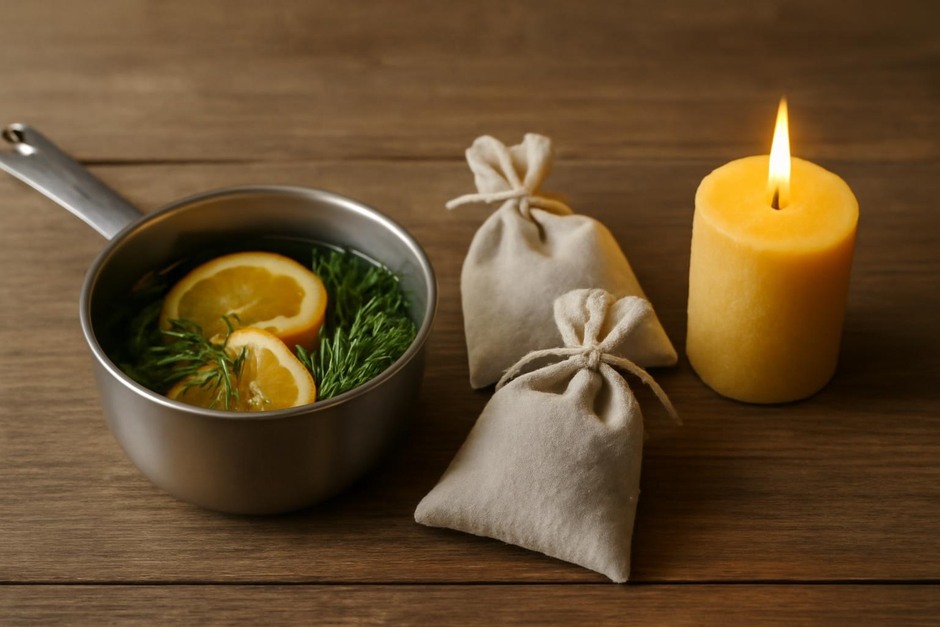
Three Low‑Tech Ways to Scent Your Home Naturally: Simmer Pots, Herbal Sachets, and Beeswax Candles
If you prefer subtle, naturally derived aromas in the home, three low‑tech methods cover most needs: stovetop simmer pots, dried‑herb sachets, and beeswax candles. Each uses different materials and actions, and each carries trade‑offs in longevity, intensity, upkeep, and material sourcing. Below is a practical comparison of how they work, what you need, and the situations where they excel—followed by guidance to decide which approach (or combination) suits your home.
Approach 1: Stovetop Simmer Pots
Materials and method
- Materials: small saucepan or simmer pot, water, citrus peels (orange, lemon), fresh or dried herbs (rosemary, thyme), whole spices (cinnamon sticks, cloves), optional vanilla or ginger.
- Method: combine ingredients in a pot with water, bring to a gentle simmer, and maintain low heat. Refill water as needed and discard solids after use.
Trade‑offs
- Strength: High and immediate; you control intensity by heat and ingredient quantity.
- Duration: Short bursts of fragrance that end when the pot cools or is emptied.
- Maintenance: Requires active attention (watching water level, occasional stirring) and stove use.
- Sourcing: Uses common kitchen leftovers—very low cost and low waste.
- Limitations: Not suitable for long absences, and careful monitoring is needed if leaving unattended.
Approach 2: Dried‑Herb Sachets
Materials and method
- Materials: breathable fabric pouches or cotton bags, dried lavender, rose petals, lemon balm, cedar shavings, or mixed potpourri; optional essential oil drops for refreshment.
- Method: fill pouches with dried botanicals, place in drawers, closets, or hang near vents. Refresh by gently crushing contents or adding a few drops of oil every few weeks.
Trade‑offs
- Strength: Mild to moderate; more subtle and localized compared with simmering.
- Duration: Long‑lasting—weeks to months—depending on botanicals and storage.
- Maintenance: Low; occasional refreshing or replacing of sachets is all that’s needed.
- Sourcing: Can be homegrown and dried, making it sustainable and inexpensive after initial setup.
- Limitations: Not effective for scenting large open spaces and aroma diminishes gradually.
Approach 3: Beeswax Candles (Unscented or Lightly Scented)
Materials and method
- Materials: pure beeswax candles or homemade beeswax poured into tins, cotton or wooden wicks; optional addition of dried herbs placed near the candle base—but avoid burning plant matter directly on the flame.
- Method: light a beeswax candle to emit a warm, honeyed scent and gentle ambient light. Extinguish safely when finished.
Trade‑offs
- Strength: Soft, background aroma—less intense than concentrated essential oils or simmer pots.
- Duration: Moderate: a single candle provides hours of scent while alight and leaves a faint trace after extinguishing.
- Maintenance: Requires attentive use (fire safety) and mindful placement to avoid dripping or soot on surfaces.
- Sourcing: Natural option when beeswax is local or ethically sourced; waxed containers are reusable if chosen thoughtfully.
- Limitations: Produces heat and flame, so it’s not suitable if you need an unsupervised or continuous scenting method.
How to Choose Between Them
Ask a few practical questions to match method to needs:
- How long do you want the scent to last? Choose sachets for long, low‑maintenance fragrance; simmer pots for short, powerful bursts; candles for intermittent ambience while present.
- How large is the space? Simmer pots and multiple candles work better in larger living areas. Sachets suit small rooms, closets, and drawers.
- How much hands‑on time do you prefer? If you enjoy kitchen rituals, simmer pots reward regular attention. If you prefer set‑and‑forget, sachets are ideal; candles sit between the two.
- Do you want heat or flame in the space? Avoid candles and simmering if flame or heat is a concern—sachets are safest for unattended scenting.
- Is sustainability a priority? Use leftover peels for simmering, home‑dried herbs for sachets, and locally sourced beeswax to minimize footprint.
Mixing Methods
These approaches complement each other. For example, sachets can scent storage spaces year‑round while a simmer pot refreshes the kitchen for guests. Beeswax candles add warmth and a soft background note during evenings. Keep scents in the same family (citrus + herbs, or wood + spice) to avoid clashes.
Practical Tips
- For simmer pots, keep water shallow and refill; discard solids rather than leaving them to spoil.
- Dry herbs in a dark, ventilated space to preserve aroma; store sachets in airtight boxes until use if you want longer shelf life.
- Trim candle wicks to 5–7 mm to reduce soot and promote even burning.
Choosing between simmer pots, herbal sachets, and beeswax candles comes down to temporal needs, space, safety, and how involved you want to be. Each method brings a different character to a home: the active comfort of a simmering pot, the quiet persistence of dried botanicals, and the gentle glow of beeswax. Try one or combine them in small ways to learn what suits your rhythms and the house you live in.